
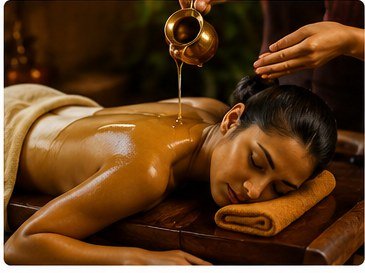
Understanding Abhyanga in Ayurvedic Practice
In classical Ayurveda, Abhyanga is recognized as an integral external oleation therapy (Bahya Snehana). Rather than a generic full-body massage, it is an individualized therapeutic procedure designed to nourish bodily tissues (Dhatus), pacify systemic Vata imbalances, and improve cellular microcirculation.
The choice of herbal oils, duration, temperature, and surrounding care varies according to your constitution (Prakriti), digestive strength (Agni), and current health presentation. At Sri RN Ayurveda, Panchakarma procedures are approached as part of an appropriate Ayurvedic care plan rather than as isolated treatments.
What Clinical Abhyanga Supports
- Musculoskeletal Ease: Helps relieve muscular fatigue, morning joint stiffness, and chronic neuromuscular tension.
- Vata Pacification: Restores natural lubrication to dry, depleted tissues and calms an overactive nervous system.
- Circulatory & Lymphatic Support: Rhythmic directional strokes encourage peripheral blood flow and lymphatic drainage.
- Preparation for Deeper Therapies: Serves as an essential preparatory step (Purvakarma) to loosen metabolic waste (Ama) before detoxification.
From Consultation to Therapy
A structured clinical pathway ensures your care remains safe, transparent, and individualised:
Your consultation helps determine whether Abhyanga is appropriate and which specific medicated oil fits your constitution and current symptoms.
The therapy is conducted using dosha-specific medicated oils with carefully monitored pressure and duration under physician guidance.
Post-therapy rest, gentle herbal steam (Swedana) if indicated, and dietary instructions form part of your recovery roadmap.