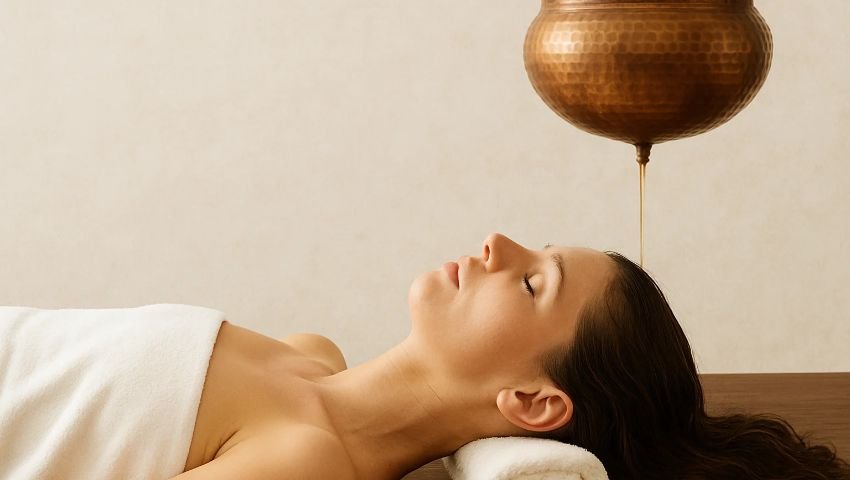
In Ayurveda, Takradhara is a specialized procedure in which cool, herb-infused medicated buttermilk (Takra) is poured in a continuous stream across the forehead and scalp. By pacifying aggravated Pitta heat, softening Vata-Kapha plaques, and calming stress pathways in the nervous system, Takradhara reduces scalp scaling, itching, and recurring flare-ups naturally.
Scalp psoriasis can be one of the most exhausting forms of psoriasis to live with. Thick silvery-white scales along the hairline, behind the ears, and across the crown often resist routine coal-tar or salicylic washes—and topical steroid lotions frequently trigger stronger rebound flare-ups the moment you pause them.
When integrated into a doctor-supervised Ayurvedic psoriasis treatment in Hyderabad, Takradhara addresses both the physical skin inflammation on the scalp and the mental stress that quietly triggers new outbreaks.
1. Why Scalp Psoriasis Needs More Than Topical Shampoos
In classical Ayurvedic dermatology (Kushtha Roga), scalp psoriasis shares clinical features with Ekakushtha and Kitibha Kushtha—chronic skin disorders driven by three interconnected root imbalances:
- Aggravated Vata and Kapha on the Scalp: Excess Vata causes severe dryness, cracking, and rapid silvery flaking, while Kapha produces thick, elevated, stubbornly adherent plaques.
- Pitta and Rakta (Blood) Heat: Underlying heat and vitiated blood tissue fuel redness, tenderness, burning sensations, and relentless itching around the hair follicles.
- The Stress–Scalp Loop (Manovaha Srotas): Psoriasis is deeply psychosomatic. High work stress, anxiety, and fragmented sleep stimulate neuro-inflammatory pathways that accelerate skin cell turnover—meaning a stressful week often shows up as an itchy scalp flare-up days later.
Anti-dandruff shampoos only strip away surface scales for 24 to 48 hours. Lasting control requires cooling local scalp inflammation while calming the autonomic nervous system and clearing internal digestive toxins (Ama).
2. Why Medicated Buttermilk Outperforms Heavy Oils on Psoriatic Plaques
The Sanskrit term Takradhara combines Takra (specially churned, fat-free medicated buttermilk) and Dhara (a continuous therapeutic stream). Unlike standard oil-based Shirodhara and specialized Dhara therapies, Takradhara uses a cooling herbal decoction—most commonly processed with Amalaki (Indian gooseberry), Musta (nutgrass), and soothing Pitta-pacifying botanicals—blended with fresh buttermilk.
Heavy oils can sometimes trap heat or feel overly occlusive when active Pitta redness and Kapha buildup are present on the scalp. Medicated Takra offers distinct clinical advantages:
| Clinical Feature | Takradhara (Medicated Buttermilk) | Taila Shirodhara (Medicated Oil) |
|---|---|---|
| Primary Thermal Action | Deeply cooling (Sheeta Virya)—calms burning and redness | Warming to neutral—nourishes dry tissues |
| Best Dosha Target | Pitta & Kapha dominance (inflamed, thick, itchy plaques) | Vata dominance (dryness, nerve exhaustion, insomnia) |
| Effect on Scalp Scales | Gently softens and loosens thick scales without clogging follicles | Lubricates dry scalp skin |
| Nervous System Impact | Relieves stress-induced flare-ups and improves deep sleep | Deeply grounds anxiety and mental fatigue |
3. How Takradhara Is Performed (3-Step Clinical Protocol)
At Sri RN Ayurveda, Takradhara is never performed as a generic salon ritual. Every course is customized after a detailed Nadi Pariksha (pulse diagnosis) and scalp examination:
Step 1: Purva Karma (Preparation)
Your scalp and forehead are gently prepared, and protective cotton pads are placed comfortably over the eyes. Freshly churned, cool Amalaki-and-Musta infused medicated buttermilk is filled into a traditional Dhara vessel suspended 4 to 6 inches above the forehead.
Step 2: Pradhana Karma (The 35–45 Minute Stream)
A trained therapist guides a thin, uninterrupted stream of medicated Takra rhythmically across the forehead and hair roots for 35 to 45 minutes. This steady flow stimulates key Marma points, quiets overactive stress responses, and bathes psoriatic plaques in cooling herbal actives.
Step 3: Paschat Karma (Post-Therapy Protection)
After the stream concludes, the scalp is gently blotted dry, a protective pinch of Rasnadi Churna is applied to the crown to prevent cold sensitivity, and you rest quietly for 15–20 minutes before rinsing with lukewarm herbal water.
4. Pairing Takradhara With Internal Gut–Skin Detoxification
Depending on plaque thickness and how long you have had scalp psoriasis, a focused course of 7 to 14 consecutive daily sessions is typically advised. To prevent plaques from returning, external scalp therapy is paired with internal bio-purification:
- Virechana Karma (Therapeutic Purgation): Gently clears excess Pitta and cleanses Rakta Dhatu (blood tissue) through the gut, cooling systemic inflammation.
- Medicated Ghees (Tikta Ghrita): Bitter herb-infused ghees nourish deep tissue layers and modulate immune hyperactivity without drying out the skin.
- Blood-Purifying Formulations: Classical combinations containing Khadira, Guduchi, Manjistha, and Nimba tailored to your constitution inside our personalized Panchakarma detoxification programs.
5. Scalp Care & Diet Blueprint (Pathya-Apathya)
In Ayurveda, incompatible food combinations (Viruddha Ahara) directly fuel blood toxicity and scalp itching. Supporting your therapy in your kitchen prevents new scales from forming between sessions:
✓ Foods & Habits to Favor (Pathya)
- Warm, freshly cooked, easily digestible meals
- Bitter vegetables: bitter gourd, ridge gourd, bottle gourd, and leafy greens
- Aged rice, green gram (moong dal), barley, and moderate pure cow's ghee
- Gentle sulfate-free herbal scalp cleansing with lukewarm water
- Sleeping before 10:30 PM to prevent night-time Vata-Pitta spikes
✕ Triggers to Minimize (Apathya)
- Curd (yogurt), especially at night or paired with sour fruits
- Incompatible combinations (fish with milk, cold drinks with hot meals)
- Excessive sour, salty, fermented, pickled, or deep-fried foods
- Hot water head washes and scratching/picking at scales (which triggers the Koebner phenomenon)
- Refined sugar, bakery items, smoking, and alcohol
6. Safety & Contraindications: Who Should Avoid Takradhara?
Because Takradhara has a pronounced cooling effect, it must always be performed under medical supervision. It is temporarily deferred if you currently have:
- Acute sinusitis, severe nasal congestion, or an active cold
- Active fever, rhinitis, or lower respiratory infection
- Open, bleeding, or actively weeping scalp wounds (managed first with gentle herbal Kashaya washes)
7. Frequently Asked Questions
1. How many Takradhara sessions are needed for scalp psoriasis?
2. Does Takradhara help with hair fall caused by scalp psoriasis?
3. Why is medicated buttermilk preferred over oil Shirodhara for scalp psoriasis?
4. Can I consult your clinic if I live outside Hyderabad?
Dr. Akshay Kale (MD Ayurveda)
Dr. Akshay Kale is the Chief Ayurvedic Physician at Sri RN Ayurveda & Panchakarma Clinic in Pragathi Nagar, Hyderabad. He specializes in root-cause management of autoimmune skin conditions (psoriasis, eczema), spine and joint disorders, and classical Keraleeya Panchakarma detoxification through individualized Nadi Pariksha.